
Franklin County Property Tax Records
Figure out which half of the record you need first. One office values the real estate. Another collects the money. The Commissioner of Revenue builds the assessment and the ownership history. The Treasurer runs the bill and the account. A GIS map can pin down the parcel. It will not tell you whether a tax bill is current. Route each question to the office that owns that record. Do not treat a value card and a tax account as a single document.
| Tax record field | What it tells you | Where to look |
|---|---|---|
| Assessed value | County's taxable valuation at the applicable assessment date | Commissioner of Revenue real-estate service |
| Ownership history | Owner changes and deed or plat references in history files | Commissioner, then Circuit Court Clerk for instruments |
| Bill and payment | Current charge, posted payment, and account balance | Treasurer and FranklinVATax |
| Delinquency or sale notice | Collection status and public tax-sale announcement | Treasurer account and county tax-sale page |
| Relief or exemption | Whether a tax program is reflected in the account | Commissioner or Treasurer, depending on the program |
Begin with the tax-map parcel number or the property address. Then confirm the account and the assessment both point to the same tract. The Franklin County property value page explains why an assessed number differs from a market opinion or a sale price.
Who Maintains Franklin County Tax Records
The Commissioner of the Revenue handles real-estate assessment, valuation, ownership history, and assessment appeals. Franklin County notes that history files may hold deeds and plat references. They may also include ownership chains and specific house details. The Treasurer owns billing, payment, delinquency, and collection, with an office at 1255 Franklin Street, Suite 101, Rocky Mount. A directory listing gives 540-483-3078. Both offices draw on related parcel data. They simply answer different questions.
Call the Commissioner when a tax-roll owner, land characteristic, or assessed value looks wrong. Call the Treasurer when the fight is over a balance, receipt, or payment status. A transfer that just closed also deserves a look at the recorded deed. That deed sits with the Circuit Court Clerk. The lag between deed recording and a tax-roll update is not published. Never assume both screens change the same day.
The county's real-estate assessment and appeals page details the Commissioner's duties and history files. The Treasurer page carries contact information for tax-account questions.
Franklin County's Fair-Market Standard
Franklin County assesses real estate at 100 percent of fair market value. Reassessment runs on a four-year general cycle. The 2024 cycle followed 2020. County material points to 2028 as the next planned round. Those dates describe the program itself. They do not mark the day a parcel sold or an account changed.
Assessment staff reviewed current sales and walked parcels over roughly 18 months. They checked data cards and photographed property details. That is why a property record can show an updated feature without any new deed. A tax-roll change can come straight from the assessment process. A sale price and a fresh appraisal of value may land close together. But one is a recorded transaction, and the other is the county's number for taxation.
The county's property assessment page lays out the fair-market basis and each review stage. Read that guidance alongside the parcel's own notice.
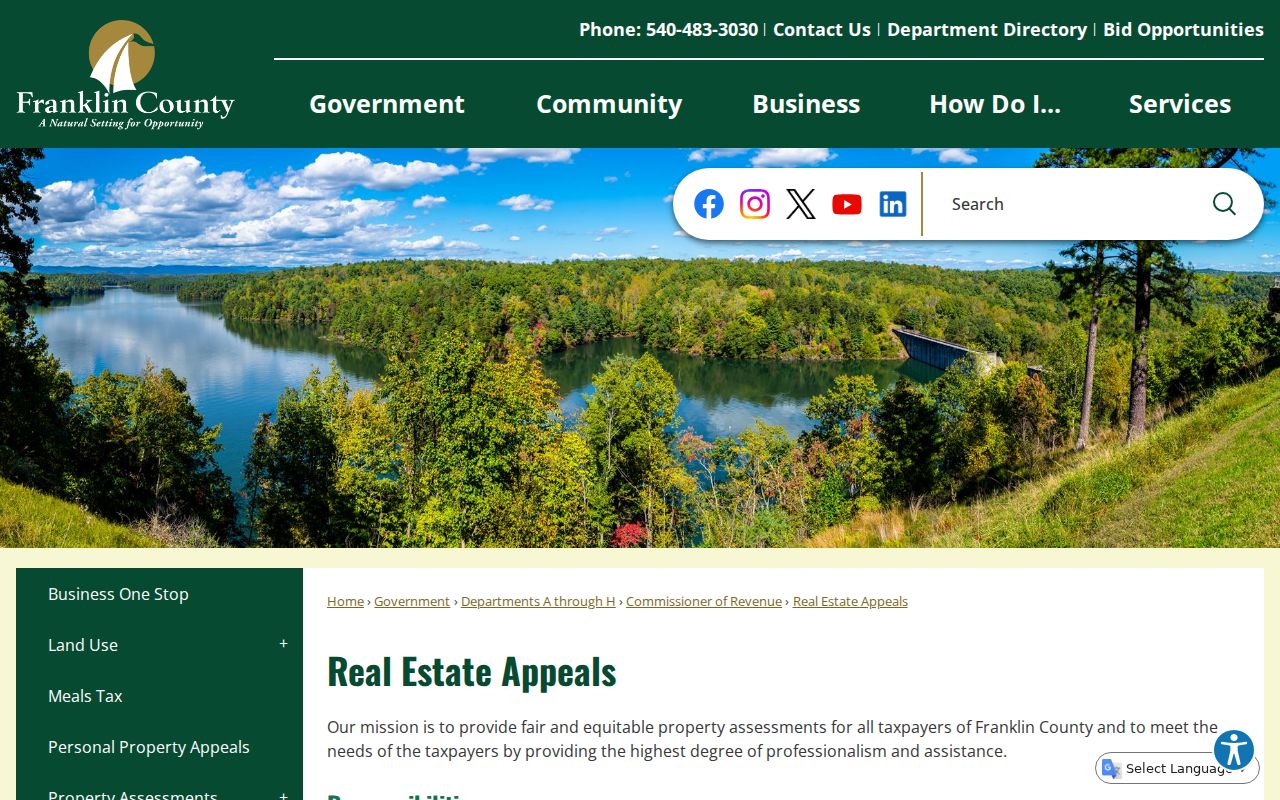
Note: Assessment notices and live account figures are parcel-specific, so the county's assessment guidance should be read with each parcel's own paperwork.
The 2024 Franklin County Reassessment
The 2024 general reassessment took effect January 1, 2024. It followed on the heels of the 2020 cycle. Proposed notices went out by mail in February 2024. Each one had appeal dates printed on it. A notice beats any generalized calendar for a real deadline. County FAQ material names 2028 for the next cycle. It also sketches expected notice timing, but that is a projection. So check the county's live updates before acting.
Comparing an old card to a 2024 value means checking whether the parcel description or building facts shifted. A reassessment reflects the county's own review of sales and property data. It does not prove an owner built anything. It is not a private appraisal either. The assessment page describes informal review and the Board of Equalization path. Anyone asking for a second look should keep notices, photos, measurements, and comparable sales together.
The separate property search route helps locate the parcel card. The appeal itself should follow the county's current instructions and the date printed on the notice.
Franklin County Tax Bills and Payment
The Treasurer maintains FranklinVATax. It is an online service for tax bill lookup and payment in Franklin County. Account search and payment options sit on the portal's payment screens. Online, card, and phone payments may carry convenience fees. So read the current terms before submitting anything. Keep your parcel or account identifier handy. The Treasurer's office handles receipts, balances, and account corrections directly.
Assessed value and tax bill are not the same thing in Franklin County property tax records. The assessment is one input. The bill applies the local rate and account details to it. Relief on a parcel can lower what is owed without touching the fair-market appraisal. If an account result looks like a different tract, stop. Compare the parcel number and situs address before paying.
The FrankVATax portal is the payment and lookup service. Franklin County links it from its FAQ material.

Confirm any convenience fee and posting status with the live service or the Treasurer.
Relief Programs and Tax Records
Franklin County offers several kinds of property tax relief. Elderly and disabled owners, veterans, and land-use property can all qualify. Terms and eligibility rules vary, though. The Commissioner or Treasurer can say which office runs each program. Ask what proof to file. A benefit may appear as an exemption on the tax bill or as another adjustment. Eligibility never follows a name on a record. Zoning is different. Land-use classification governs how the county taxes a parcel, while zoning governs what can be built. A planning record, an assessment card, and a Treasurer bill each hold part of that context. Check live county forms first. Relief can cut the tax roll amount while the market appraisal stays visible in the property records.
Name the parcel and program year. Virginia FOIA, Va. Code §2.2-3704, lets a requester seek public records with reasonable specificity, subject to exemptions and direct costs for access or copying.
Appealing a Franklin County Assessment
Read the notice first. The county publishes its appeal route in stages on the assessment page. An initial review comes first, followed by a Board of Equalization. The notice carries parcel-specific dates. The county's current assessment page names the contact point for each stage. A strong appeal needs a clear reason. Point to a factual error on the card, a condition the data missed, or comparable sales tied to the valuation date.
Keep appeals apart from bill payment. A pending review does not pause a balance. The Treasurer handles account status; the Commissioner handles valuation. Ask each office whether an appeal changes collection timing and what documents to attach, since filing rules are not spelled out everywhere.
- Read the parcel notice, effective date, and appeal date printed on it.
- Compare the property facts and assessment record with current county guidance.
- Submit the review request through the method the county currently specifies.
- Keep the response and any Board of Equalization notice with the tax account record.
Do not lean on another parcel's value alone. Access, water frontage, terrain, condition, and improvements can all matter in a county with both lakefront and mountain property.
Franklin County Delinquency and Tax Sales
Delinquent real-estate taxes go through the county Treasurer. That office publishes tax-sale notices on a county page, sometimes with auction announcements and a downloadable parcel list. Sale timing changes often. A saved screenshot or an old posting can mislead, so rely on the current official notice. A public list starts due diligence. It is not proof that a sale closed or that redemption and title issues were resolved.
For a parcel under a tax-sale notice, check the Treasurer account, the county notice, and the Circuit Court Clerk's land index. A deed of trust, judgment, lis pendens, or later release can alter the record trail. A tax payment screen is not the chain of title. Title questions deserve expert help. Ask the clerk or a professional which documents matter. The county's real-estate tax-sale page supplies public notices and list access. Check it for the current sale date and terms.
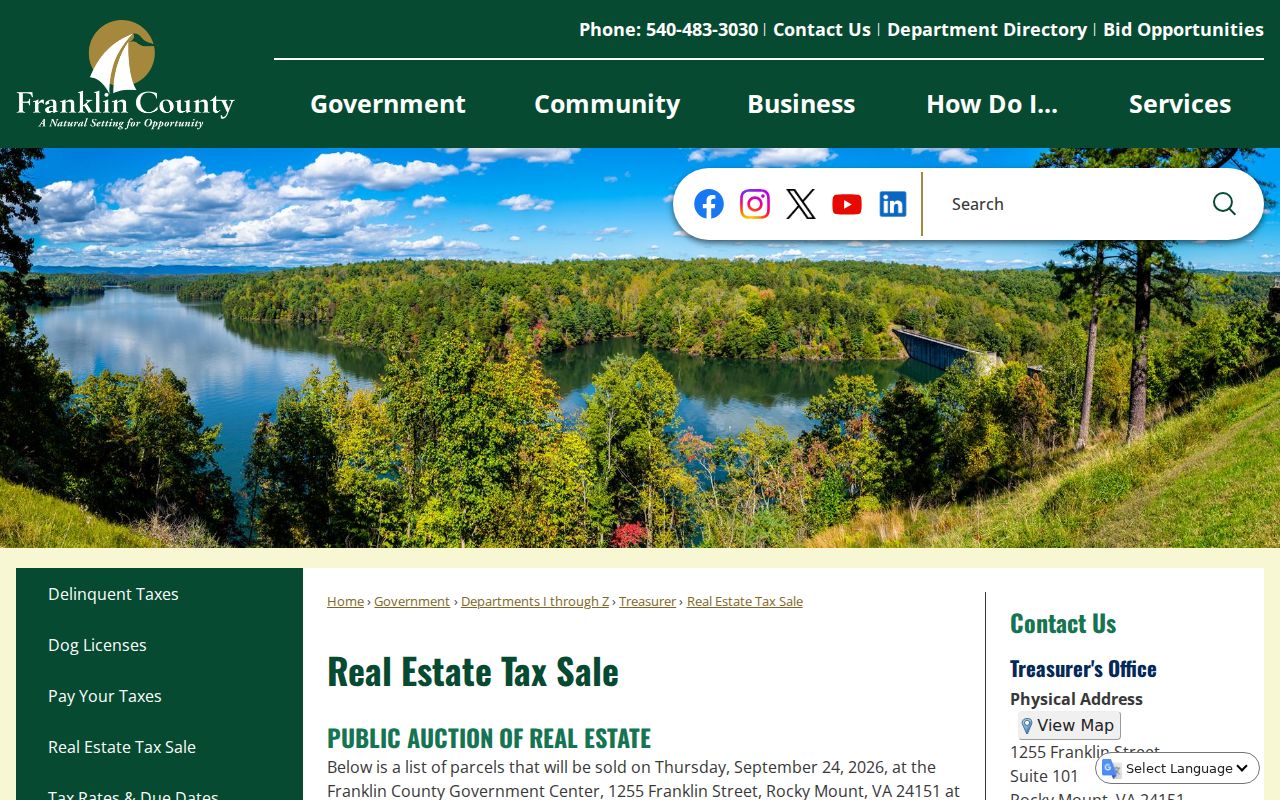
The county's official site posts the entry point for delinquency notices. Auction dates and parcel lists change, so confirm current details with the Treasurer.
Requesting Franklin County Tax Records
When an online lookup falls short, go straight to the office that keeps the record. Describe the parcel and the tax year you need. The Commissioner of the Revenue handles assessment records and ownership history. The Treasurer handles tax bills, payments, and collection status. A Virginia FOIA request must describe the records with reasonable specificity. Offices may allow inspection or provide copies. They can charge actual direct costs for search, duplication, supplies, or staff time. Ask for an estimate before ordering a large file.